|
Having trouble viewing this email? View it as a Web page.

Statement From State Superintendent Randy Dorn on Proposed 2015-17 Operating Budget (HB 1106)
OLYMPIA — March 30, 2015 — The journey to fully fund basic education for our students began well over a decade ago, highlighted by the Supreme Court’s McCleary decision. The first concrete step in this journey was the passage of House Bill 2776. I do not believe this should be the only step.
I applaud the work done in this House budget proposal to fund HB 2776:
However, this budget proposal falls short of fully funding basic education in a number of key areas:
I
am also concerned that the proposal does not address the need to reduce
reliance on local levies. In fact, in terms of compensation, this
budget increases the reliance on levy funds.
The House budget includes a long overdue cost-of-living adjustment, which I support, but the COLA is only for the personnel funded by the state. School districts will be forced to use levy money to provide similar increases to those staff funded with local funds.
This is wrong.
The
costs of employees providing basic education are a state
responsibility. Passing off this obligation to districts puts a burden
on local taxpayers that is unfair and inequitable to districts, making
it more difficult to close achievement gaps. This goes beyond just an
educational issue to a civil rights issue.
The
State is currently in contempt of court because it has failed to adopt a
complete plan showing year by year how it intends to fully fund basic
education by 2018 without the use of levies. In no way can this budget
be considered such a complete plan.
Last
spring the Legislature sent a message to the Supreme Court, assuring
the justices that it would reach "a grand agreement" on education
funding this session, and asking the Court to wait on possible
sanctions. I also asked the Court to withhold sanctions in order to give
the legislature time to act this session. But now we are in the fourth
quarter of the session and have yet to see the plan the court is
demanding.
The Legislature must adopt a clear plan for full funding of basic education this session. This budget does not.
STAY IN TOUCHWebsite | Twitter | Facebook | Flickr | Contact Us
SUBSCRIBER SERVICESUpdate your subscriptions, modify your password or email address, or stop subscriptions at any time on your Subscriber Preferences page. You will need to use your email address to log in. If you have questions or problems with the subscription service, please visit subscriberhelp.govdelivery.com
|
Tuesday, March 31, 2015
State Budget House Proposal - Dorn Response

Monday, March 23, 2015
Stressed Kids
Stressed Kids: The 3-Year-Old Who 'Grunted And Pointed'
By Ann Dornfeld
•
Oct 12, 2014
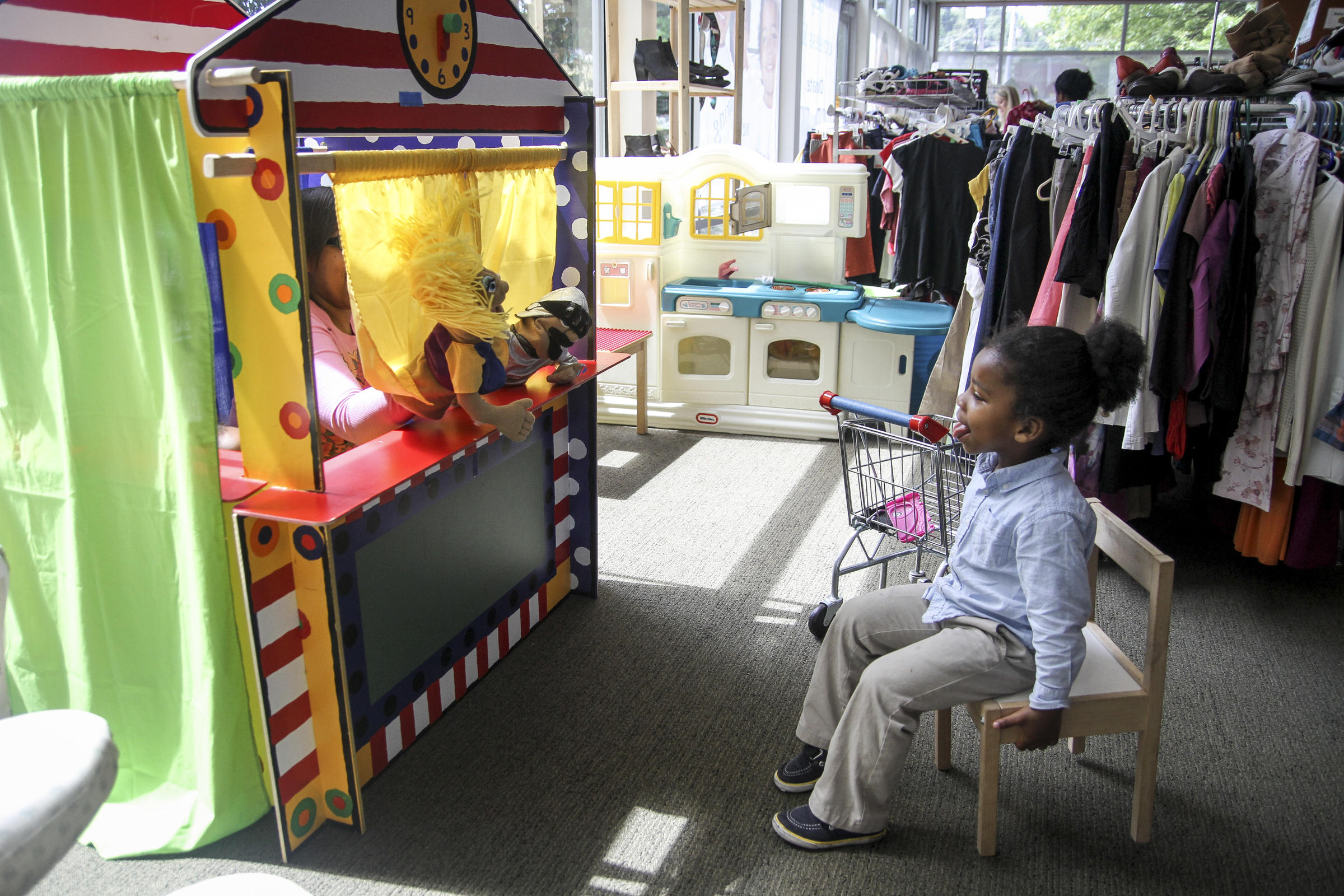
They had $5,000 from Chaney’s tax refund, which they figure would easily hold them off until they found work.
“But it didn’t happen like that,” Velma said. “Once we were putting in applications and everything, and we weren’t really getting responses back, the money started getting thin, and eventually it was gone.”
The following months were stressful – not just for her, but for the children. Her 5-year-old wasn’t the same kid anymore. He wanted to be babied. Her 3-year-old wasn’t talking yet and refused to be potty-trained.
Certain childhood stressors – from family strife to violence – can do permanent damage to growing brains. It’s known as toxic stress, and it’s especially prevalent in low-income families. Chaney watched how that stress affected her kids as they bounced from one living situation to another.
At first, she got her family on every waiting list for emergency housing she could find. With time running out, they realized there was only one option left: the Seattle tent city called Nickelsville.
But when she called the camp, the staff said they weren’t sure they could fit a family of five. Chaney remembers that day.
“We had went to the park out there in Kent and we were sitting and it was just sad because we really hadn’t eaten and we were sitting on the bleachers, we didn’t have nothing,” she said. “We just didn’t have nowhere to go.”

The kids didn’t buy it.
“I saw a lot of anger because they started lashing out … I saw a lot of withdrawal where they were holding things back,” Chaney said. “They started lying to me and stuff like that, so it was kinda a spiral.”
Laderrion, her 5-year-old, “just reverted backwards,” she said. “When it came to him being independent, he became more dependent.”
As for her youngest: “Ladamion, I would try to potty-train him. And just when I thought I was one step further to getting him where I needed him, I would have to start all over. I would have to go back to the diapers when I thought I was in the Pull-Ups stage.”
Lia’daya, Chaney’s daughter, noticed her little brother’s problems, too.
“He wasn’t really talking, because he had a speech problem, and the speech problem was really bad for him.”
Kate McLaughlin, a psychology professor at the University of Washington, said that language development is consistently impacted by tough environments. She said traumatic experiences like homelessness can do more than just rattle children in the short term.
McLaughlin’s research examines how the fear and anxiety from toxic stress can actually change the structure of the brain.
They can shrink areas of the brain that children need to succeed in school, like the hippocampus and the prefrontal cortex.
Everything from divorce in the family to exposure to neighborhood violence can impair early brain development.
“There’s a couple of things that we tend to see,” McLaughlin said. “The first is problems with these kinds of executive functioning skills – so difficulty concentrating in school, problems with working memory, being able to inhibit certain behaviors in order to pay attention in the classroom.”
She said early exposure to violence can make children vigilant to potential dangers. And that can disrupt their ability to adapt to change in the classroom.
Although traumatic events can happen in families rich or poor, there’s evidence that the stresses of poverty alone can be enough to rewire young brains.
Stresses like not having enough to eat, frequent moves and financial instability.
Other trauma is more common in poor families, as well – like a family member going to prison, domestic violence, and drug abuse.
The good news, McLaughlin says, is that children’s brains are remarkably plastic.
“Positive inputs can have just as meaningful an impact on brain development in children,” she said.
That’s the work of Wellspring Family Services in Seattle, which serves homeless children in its early learning center.
Sandy Lowe, vice president of community services for Wellspring, says therapists and teachers have little control over children’s home environments. But they can work together to help children build their coping skills.
She recalls one young boy who always came to school angry.
“He shared with the mental health therapist that he always felt like he was burning inside, like there was fire inside of him and he had to roar and rage around and get rid of the fire,” she said.
“And they talked about what puts fire out – well, water puts fire out. Maybe drinking a glass of water would be good when he felt that way.”
Pretty soon, when the boy found himself getting hot under the collar, he’d ask for a drink of water: “He would take a time out at the sink, he would drink his water, and he would go back to his classmates and say, ‘The fire’s gone.’”
Wellspring also focuses on the developmental delays that childhood traumas can cause or exacerbate.
The center is where Velma Chaney’s two sons started to get back on track – including 3-year-old Ladamion, who was barely talking when he started there.
“That was my baby that grunted and pointed for a long time,” Chaney said.
Eight-year-old Lia’daya remembers her brother’s transformation as he worked with Wellspring speech therapists.
“They was, like, saying stuff, and they was making him say it after them, and that was really helping him,” she said. “First he was kinda messed up on the first time he had did it, and then he started getting better and better. That was kinda nice.”
Lia’daya says she’s had challenges of her own.
“I was a little messed up on the reading,” she said. “I feel that I’m doing a lot better since I have growed up.”
Velma Chaney’s family is now living in transitional housing.
The apartment is sparsely furnished, but it’s theirs for two years.
On a recent visit, Lia’daya and Laderrion sat on either side of their mother on the sofa, practicing their reading.
“His dog Bill barked and stared …”
“Uh-uh.”
“Started …”
“There you go.”
“… jumping in the air. The kids laughed.”
Early interventions can help children who’ve experienced toxic stress, but researchers say it’s still early days when it comes to understanding how the damage is done to developing brains – or to what degree that damage can be undone.
Friday, March 6, 2015
Message from Randy Dorn
Dear Principal,
As you are well aware, spring testing is just
around the corner. This year will be particularly challenging as we move
to the new Smarter Balanced tests in English language arts and math.
I want to thank you for your commitment to the
transition – and for your patience as we all work to get there. Once we
get through this first testing season, the process will be much
smoother. And we will have a higher quality assessment
system that shows more accurately the progress students are making
toward career, college, and life.
By now, districts should have testing windows and
schedules set. Accommodations and designated supports can be assigned.
Test coordinators and administrators (formerly known as building
coordinators and proctors) should be identified. Training
plans should be in the works. Practice and training tests should be
used with all teachers and students to become familiar with test engine,
item types, and look and feel of new assessments. Interim assessments
are available to try and explore. And all teachers
should have access to the Digital Library. We’ve heard good things from
folks who are using it to inform instruction.
I want you to know that we are doing everything we can to support districts and schools:
1.
The assessment vendor, AIR, has guaranteed a
24-hour response time when problems arise. Software errors are typically
resolved within two to three days.2. OSPI’s assessment analysts are also responding to technical, data, and technology concerns.
3. OSPI has hired an additional assessment operations staff member to help with customer service.
4. OSPI is providing answers to most assessment questions we receive in monthly webinars and Q & As, and in materials posted on the portal.
5. OSPI has developed a list of resources to help families understand the new learning standards and related assessment system.
6. OSPI has a communications plan that includes hosting a media roundtable to inform the press about Smarter Balanced.
If you have questions, please contact your
district assessment coordinator.
I know this spring will be tough. Trying something
for the first time, especially something this big, is never easy. I
appreciate all you are doing to get this new system integrated into your
school. And for everything you are doing to
help educate the children of our state.
Randy Dorn
Wednesday, March 4, 2015

Printing Budget Update for the Year
If you notice, our printing budget is less than 25% left for the remaining 3.5 months. This budget includes print shop and copies made here at school on the copier. We can't spend more than this without impacting other budgeted items. Please think twice and then a third time when printing class sets here at school or sending print jobs. I thank all of you for your copying conversation! - Printing Management Police (PMP)

If you notice, our printing budget is less than 25% left for the remaining 3.5 months. This budget includes print shop and copies made here at school on the copier. We can't spend more than this without impacting other budgeted items. Please think twice and then a third time when printing class sets here at school or sending print jobs. I thank all of you for your copying conversation! - Printing Management Police (PMP)
Subscribe to:
Posts (Atom)